Brief № 001 · Strategy
Why most EU AI strategy frameworks did not survive 2026
Dozens of 2024-2025 'AI Transformation' frameworks are now retired or rewritten. What killed them, and which survived into 2026.
A boom of frameworks, and then silence
In the eighteen months following the public release of ChatGPT (late 2022), virtually every European consulting firm, from McKinsey to a one-person LinkedIn-poster, shipped an “AI Transformation Framework”. These artefacts had three things in common: a 2×2 matrix, a maturity ladder with five levels, and a name ending in “-X” or “Compass” or “Playbook”.
By mid-2026 most of them have been quietly retired, rewritten, or buried under a new framework. Why?
Three reasons.
Reason 1: the technology moved faster than the framework
A typical 2024 framework was anchored on assumptions like “GPT-4 class models cost $30 per million tokens”, “prompt engineering is a specialised skill requiring training”, “fine-tuning is necessary for serious enterprise use”, and “RAG architectures are the standard way to ground responses”.
By mid-2026 these are mostly wrong or trivial. Model costs have dropped roughly 10x; “prompt engineering” as a discrete role has been absorbed into normal work; agentic systems with tool use have eaten a lot of what RAG used to do; and the choice of provider and model is so volatile that locking a framework to specific names is silly.
A framework built on technology assumptions ages poorly. The ones that survived are those that were written at a deliberately higher level of abstraction (decision rights, governance, capability building), which is also why they are less actionable.
Reason 2: the regulation moved as fast as the technology
The EU AI Act was politically agreed in late 2023, formally adopted in mid-2024, entered into force August 2024, with rolling application through 2027. Most 2024 frameworks either ignored regulation entirely (treating it as a back-office matter) or treated it superficially.
By 2026 the regulatory dimension is operational, not optional. A serious AI strategy now needs to address Article 4 literacy obligations, Article 6 high-risk classification, Article 50 transparency, GPAI provider duties under Article 51-55, and the interaction with GDPR Article 22 on automated decision-making. Frameworks that don’t, look amateurish.
Most 2024 vintage frameworks have either added a hasty “regulatory annex” or been retired. The honest firms did the second.
Reason 3: the buyer market changed
In 2024, the typical AI-strategy buyer was a Chief Digital Officer or Chief Transformation Officer with a board mandate to “do something about AI” and a budget to match. Frameworks were sold to them.
By 2026 these roles have either been dismantled (because the board got tired of slides), absorbed into existing functions (the CIO inherits AI, with mixed enthusiasm), or rebranded as Chief AI Officer with a much narrower scope. The buyer profile is now more operational, more numerate, and less patient with high-concept materials.
Frameworks designed to impress a sponsor at first sight do not survive contact with a Director of Operations asking “what does this mean for my Q3 plan and budget?”.
What survived
Three categories of work from the 2024-2025 wave survived into 2026 and are still useful.
Survivor 1: structured maturity assessments tied to concrete diagnostic instruments
Not the 2×2 strategy matrix. A real maturity assessment with: a defined questionnaire, scoring rubrics, comparison with anonymised peer benchmarks, and a structured output identifying 5-10 priority actions with named owners and rough costs. These tools have proven their worth because they are operational, not narrative.
Examples we have seen used productively: Faculty AI’s internal maturity tool, the EU JRC AI Watch capability framework (public), various national-level instruments from VLAIO, Innoviris, BPI.
Survivor 2: targeted decision frameworks for specific high-stakes calls
Not the all-encompassing roadmap. A focused tool for one decision: “should we build, buy, or rent this AI capability?” or “should this AI feature ship in our product?” or “which class of risk does our use case fall into under Article 6?”. These work because they are scoped.
Survivor 3: governance and operating model templates
The least sexy survivors. Templates for AI usage policies, model governance documents, RACI matrices for AI risk decisions. Boring, durable, and exactly what most SMEs now need to comply with Article 4 and Article 26 of the AI Act.
What died
Five-level maturity ladders applied to AI strategy. Most companies are at “level 2” by 2026 and will be at “level 2” indefinitely because the ladder was a marketing artefact, not a description of reality.
“AI value creation” wheels and circles. The hub-and-spoke diagrams with five themes radiating from a centre were impressive in 2024, irrelevant in 2026.
Roadmaps with three-year horizons. The horizon was always fictional in a field that moves quarterly. By 2026 even consultancies’ own marketing has shifted to quarterly horizons.
“AI Centres of Excellence” recommendations. Setting up a centralised AI team that owns all AI work has failed in most large EU enterprises that tried it. The successful model is distributed teams with central governance, not centralised execution. Consultancies that pushed the CoE template lost credibility.
Generative AI use-case libraries (also called “AI playbooks”). Generic libraries of 50-200 potential use cases for every industry under the sun. Useless because the relevant use cases for your specific business are obvious after a 2-hour workshop and don’t need a 200-page library to find.
What this implies for SMEs in 2026
A few practical conclusions for SME leaders engaging with consultancies in 2026.
Reject any deliverable that consists of more than 30 slides. If it can’t be said in 30 slides, it can’t be implemented.
Reject any roadmap longer than 12 months. AI changes too fast. A 12-month roadmap should be rebuilt every 6 months.
Demand operating model and governance work, not just “strategy”. Strategy without governance is just an opinion.
Refuse maturity assessments that don’t include explicit benchmarking against named peer organisations. A maturity score without peer comparison is theatre.
Ask about the AI Act dimension explicitly. If the consultancy doesn’t have a clear answer, they are out of date.
Insist on at least one named operational outcome with a measurable target. “Drive AI maturity to level 3 by 2027” is not an outcome. “Reduce time-to-quote in sales from 5 days to 1 day by end of Q4” is.
A self-critical postscript
ARCKONE published its own first “AI for SME engineering” framework in late 2025. It was a 5-step thing with a Greek letter for each step. By March 2026 we had retired it and replaced it with a much simpler three-question diagnostic. The first version was a marketing artefact that did not survive client contact. Lesson learned.
If your consultancy hasn’t retired any of its own frameworks in the last 18 months, they are either lucky, lying, or not paying attention.
Frequently asked questions
How do I tell if a framework I'm being pitched is current or outdated?
Three quick tests. One: does it explicitly cover AI Act articles 4, 6, 50? Two: are the technology assumptions still valid (no references to fine-tuning as default, no five-level prompt-engineering ladder)? Three: does the roadmap horizon stay under 12 months?
What replaced the centralised AI Centre of Excellence model?
Distributed teams with central governance. Successful EU enterprises in 2026 keep AI execution in business units (sales, ops, finance) and run governance, security, and compliance centrally. The full-CoE model where a central team owned all AI work failed in most large EU enterprises that tried it.
Should we hire a strategy consultancy at all in 2026?
Yes if you need maturity benchmarking against named peers, governance and operating-model design, or AI Act qualification. No if you only need a deck to show the board. For execution, prefer engineer-led boutiques with vertical experience.
The publisher of this site published its own framework in 2025 — what happened?
It was retired in March 2026 and replaced with a much simpler three-question diagnostic. The original was a marketing artefact that did not survive client contact. The desk mentions this not for self-flagellation but to make the point: any consultancy that hasn't retired any framework in the last 18 months is either lucky or not paying attention.
Sources
- Primary Regulation (EU) 2024/1689 (AI Act) — articles affecting strategy frameworks EUR-Lex accessed
- Official AI in the workplace — EU report on adoption and governance practices CEDEFOP (European Centre for the Development of Vocational Training) accessed
- Data Mapping AI Adoption in the EU — 2025 indicators European Commission, DESI accessed
- Press Sifted — coverage of EU AI strategy spending and consultancy market Sifted accessed
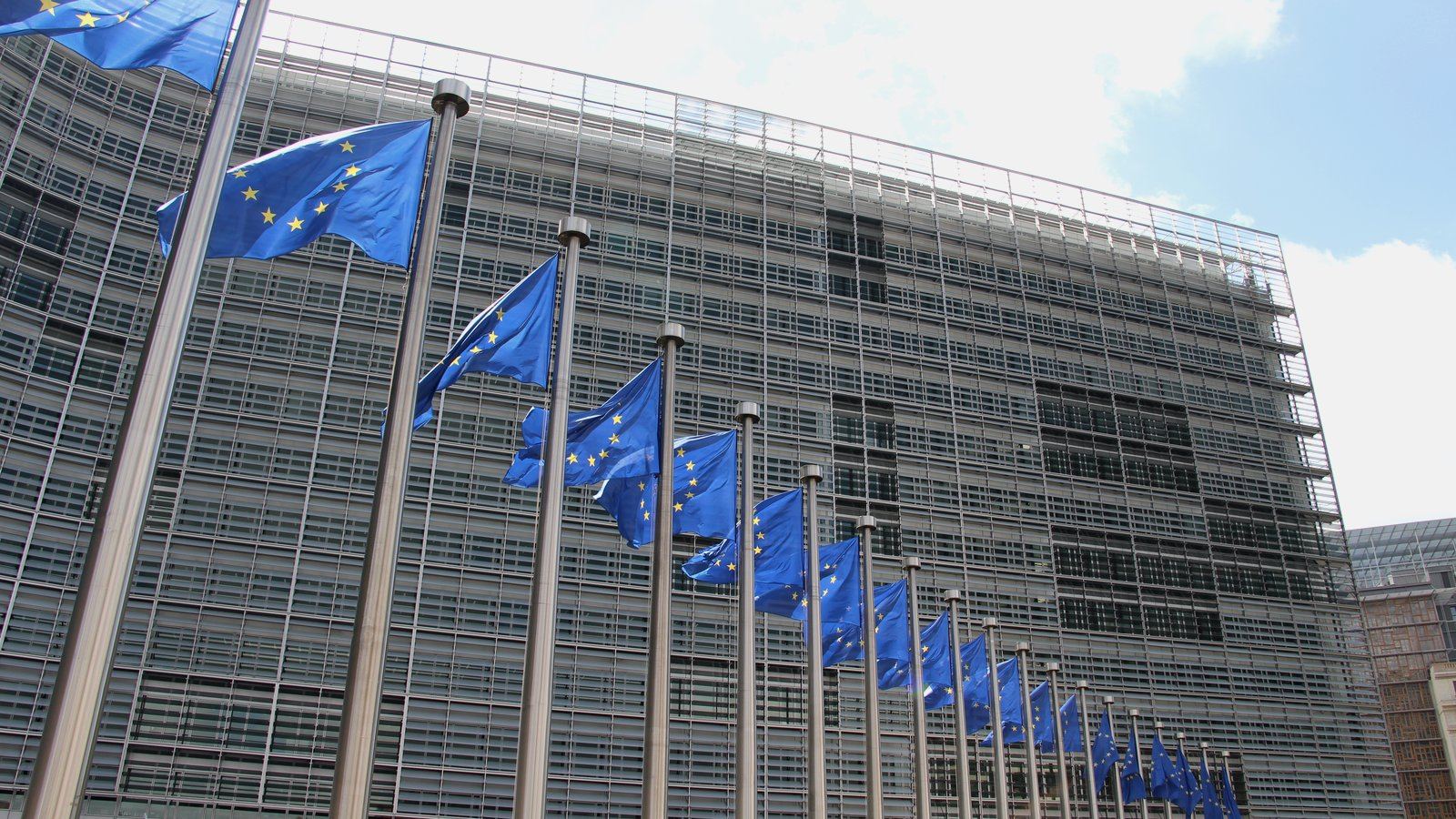
Image credit: Photo: Berlaymont, European Commission, Brussels — Fred Romero, CC BY 2.0 (Wikimedia Commons)
Marcus Heller covers the DACH market and strategy post-mortems for Flint Brief.
Spotted an error or want a right of reply? hello@flintbrief.com (subject [Right of reply]).