Brief № 002 · Market
Honest AI advisors for EU SMEs: who actually helps in 2026
Curated map of AI consultancies that genuinely serve European SMEs in 2026. Named names, real strengths and limits — publisher included, with disclosure.
The shape of the EU advisory market
The European AI advisory market in 2026 is segmented in ways that matter for buyers.
At the top end, the global strategy houses (McKinsey QuantumBlack, BCG GAMMA, Bain Vector, Accenture Applied Intelligence) employ thousands of consultants across European offices. Their fees, methods, and client mix make them effectively inaccessible to SMEs below ~€100M turnover. Useful to know they exist, irrelevant to most readers of this site.
Below them, a mid-market layer of pan-European boutiques and national champions. Faculty AI in the UK, Hypatos in Germany, ML6 and Faktion in Belgium, Datalumen in NL, Niko Studio and Hubvisory in France, Anyverse and various others in Iberia and Nordics. These firms typically serve mid-market and enterprise, occasionally well-funded scale-ups.
At the SME-relevant layer, a fragmented set of smaller boutiques, engineer-led consultancies, and high-end freelancers. This is where most EU SMEs should look. It is also where information asymmetry is highest because there is no single “Yellow Pages” of credible AI boutiques per country.
This briefing focuses on the SME-relevant layer, with selective notes on mid-market firms that occasionally take SME engagements.
The eight firms we keep recommending
Faculty AI (London, UK)
UK enterprise and public-sector AI consultancy. ~250 people. Strong references in NHS, central government, defence. Excellent published technical content.
Strengths: technical depth, strong engineering culture, formidable references. Limits: enterprise pricing, project size typically £100k+, less suited to SMEs below ~£20M turnover. Right call for: UK or EU-based scale-up or mid-market firm with a serious AI project. Not a fit for a 20-person SME.
Tractable (London, UK)
Vertical AI product company (computer vision for insurance and automotive) more than a generic consultancy. Notable because their domain depth is a useful benchmark for “what serious applied AI looks like”.
Strengths: vertical excellence, real production deployments, post-Brexit still very EU-connected. Limits: product company, not advisory. Reference only if you are in insurance or automotive.
Hypatos (Berlin, DE)
Document understanding AI for finance and operations. Mid-market scale. Strong DACH presence.
Strengths: vertical focus on document-heavy workflows, mature product, GDPR-native. Limits: product-first, not generic advisory. Useful if your problem is document extraction at scale.
Mid-market boutiques worth knowing
- Anyverse (Spain) — synthetic data and simulation, strong in mobility and computer vision.
- Stratosphere AI (UK/EU) — applied AI for financial services and operations.
- Helsing (Munich, DE) — defence-grade AI, irrelevant to most civilian SMEs but a notable EU player.
For a typical EU SME, these are reference points more than first-call advisors.
SME-relevant engineer-led boutiques
This is where most readers should look. The good ones share a profile:
- Founder is an engineer who codes, not a former consultant who sells.
- Team size 3-30 people.
- Average project size €15,000 to €80,000.
- Clear specialisation, often vertical (industry, healthcare, professional services) or methodological (workflow automation, RAG, fine-tuning).
- Public content showing real technical thinking.
A non-exhaustive sample of firms in this layer (signal not endorsement, do your own due diligence):
- ARCKONE (BE) — engineer-led, francophone-EU focus, SME 5-100 people, specialisation in workflow automation and technical industries (construction, engineering, professional services). Publisher of this site; included for completeness.
- Datalumina (Brussels, BE) — boutique data and AI consultancy serving Belgium-NL mid-market, training-heavy.
- Stratopia (Amsterdam, NL) — small AI engineering shop, Dutch SME and mid-market.
- Various Nordic boutiques — the Nordics have a strong tradition of small, deeply technical consultancies. Country-specific research recommended.
For each, the test is the same: can the founder explain in 10 minutes, without slides, what your specific problem is and how they would scope a small first step? If yes, they probably understand. If you get methodology theatre instead, move on.
Where most SMEs go wrong in selection
1. Going too big.
A 40-person SME hiring McKinsey for an AI strategy is a bad match for everyone involved. The client pays €150,000+ for a deck that does not get implemented, the consultancy assigns juniors who would rather be on a Fortune 500 account, and the relationship ends in mutual disappointment. Match firm size to your size.
2. Going too small without redundancy.
The opposite mistake. A single freelance senior at €1,200/day is excellent value for a 6-week assignment. As the sole executor on a 12-month project, they are a single point of failure. If they leave, get sick, or get a better offer, the project dies. For anything beyond 8 weeks, prefer a small team over a solo.
3. Choosing on generalist credentials, not specific track record.
An AI consultancy that has done 30 projects across 12 industries is not 30 projects’ worth of expertise in your industry. Ask specifically: “show me three projects in our sector”. If they can’t, they are about to learn on your time.
4. Ignoring the maintenance handover.
An AI system in production needs continuous attention (model drift, edge cases, security patches, dependency updates). If the consultancy hands you a system without a clear maintenance plan and price tag, you are inheriting a future failure.
5. Underweighting the EU regulatory dimension.
A consultancy that doesn’t talk to you about the AI Act and GDPR alignment in 2026 is either selling you old playbooks or hoping you won’t notice. EU regulatory fluency is now part of basic competence, not a premium feature.
A heuristic decision tree
- You are a 5-30 person SME with one specific operational pain. → SME-relevant boutique, project €15-50k, 6-12 weeks.
- You are a 30-100 person SME wanting to integrate AI into a core product or workflow. → Engineer-led boutique with vertical experience, project €40-120k, 3-6 months.
- You are a 100-500 person mid-market firm with a structuring transformation. → Pan-European boutique (Faculty, ML6, similar), project €150k-500k, 6-18 months.
- You are 500+ person enterprise. → Mix of in-house team plus external for niches; the strategy houses are an option but rarely the best one.
Right of reply
If a named firm wants to flag how it is described, write to hello@flintbrief.com with [Right of reply]. The desk responds within a week and publishes corrections with a dated note.
How we built this list
- Public references on each firm’s website verified.
- LinkedIn cross-check of team size and seniority.
- Cross-referencing with industry coverage in Sifted, Tech.eu, The Information, FT, Politico Europe.
- Where we have direct knowledge from working alongside or competing with a firm, we say so.
- We deliberately excluded firms with which we have a current commercial relationship, to avoid undisclosed bias.
Frequently asked questions
How do I match a consultancy size to my company size?
Rough heuristic: a 5-30 person SME with one operational pain → SME-relevant boutique, €15-50k, 6-12 weeks. A 30-100 person SME integrating AI into core workflow → engineer-led boutique with vertical experience, €40-120k. A 100-500 person mid-market firm with structural transformation → pan-European boutique, €150k-500k.
How can I tell if an AI consultancy will overpromise?
Test: ask the founder to explain in 10 minutes, without slides, what your specific problem is and how they would scope a small first step. If you get methodology theatre instead of a concrete proposal, move on. Also: ask for three projects in your sector — if they can't, they will learn on your time.
Is using a single senior freelancer a viable alternative?
Excellent value for a 4-8 week assignment at €1,000-€1,400/day. As the sole executor on a 12-month project, they are a single point of failure: illness, departure, better offer all kill your project. For longer engagements, prefer a small team of 3-5 people.
Why is the publisher of this site listed in its own panorama?
Excluding the publisher would be dishonest. The same public criteria are applied to every firm listed; the dual editorial-commercial role is disclosed at the top of the briefing; and the desk explicitly points out competitors that are a better fit than the publisher for specific situations.
Sources
- Secondary Faculty AI — case studies Faculty (London, UK) accessed
- Secondary ML6 — customer cases ML6 (Ghent, BE) accessed
- Secondary Hypatos — about us Hypatos (Berlin, DE) accessed
- Secondary Tractable — insurance and AI claims automation Tractable (London, UK) accessed
- Secondary Faktion — AI engineering services Faktion (Belgium) accessed
- Data European DIGITAL SME Alliance European DIGITAL SME Alliance accessed
- Press Sifted — Artificial Intelligence coverage Sifted accessed
- Press Tech.eu — AI startup market reports Tech.eu accessed
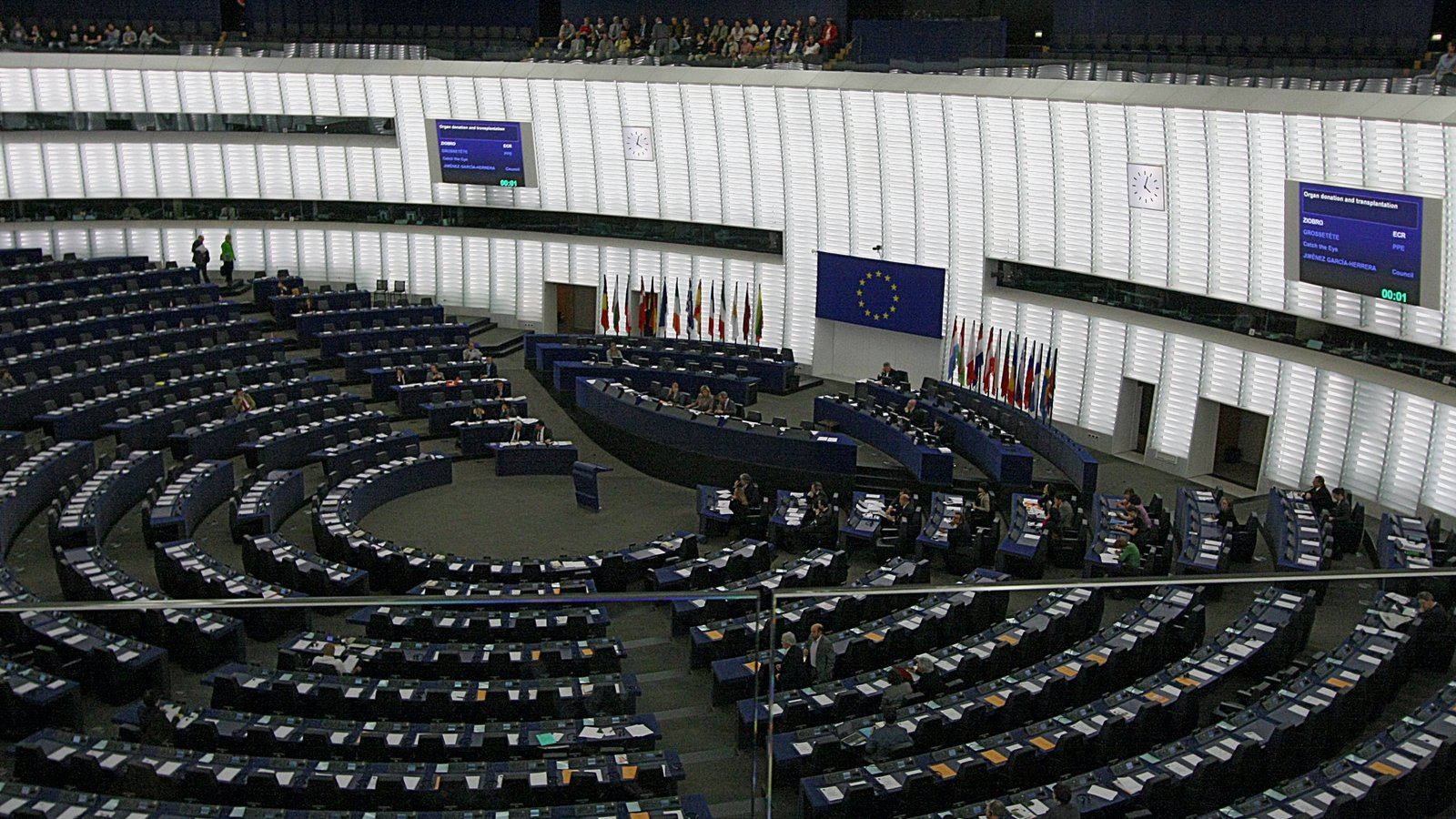
Image credit: Photo: European Parliament Louise Weiss hemicycle, Strasbourg — Wikimedia Commons, CC BY 2.0
Iris Van Loon covers SME operational reality and advisors for Flint Brief.
Spotted an error or want a right of reply? hello@flintbrief.com (subject [Right of reply]).